Dissertation Research

Agglomeration Economies
in Social Innovation Cluster

Networks and Agglomeration Dynamics

How does government intervention in a social innovation cluster
shape network structure and the dynamics that flow through it?

Scroll to explore ↓
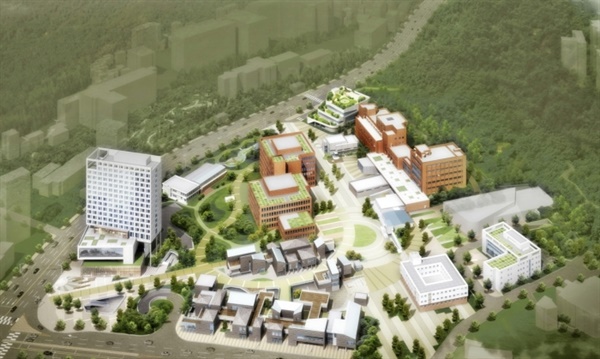
Seoul Innovation Park aerial view
Seoul Innovation Park

A Laboratory for Social Innovation

Seoul Innovation Park is a social innovation cluster established by the Seoul Metropolitan Government on a 100,000 square-meter site in Eunpyeong-gu. Since its opening in 2015, approximately 600 social economy organizations (SEOs) have taken residence here: social enterprises, community businesses, cooperatives, and 11 intermediary support organizations, all sharing space, resources, and networks.

This research explores three questions about this cluster. How does the social innovation network evolve under government intervention? Does diversity within the cluster affect organizational survival? And what agglomeration effects emerge when organizations are brought together in one place, connected through networks?
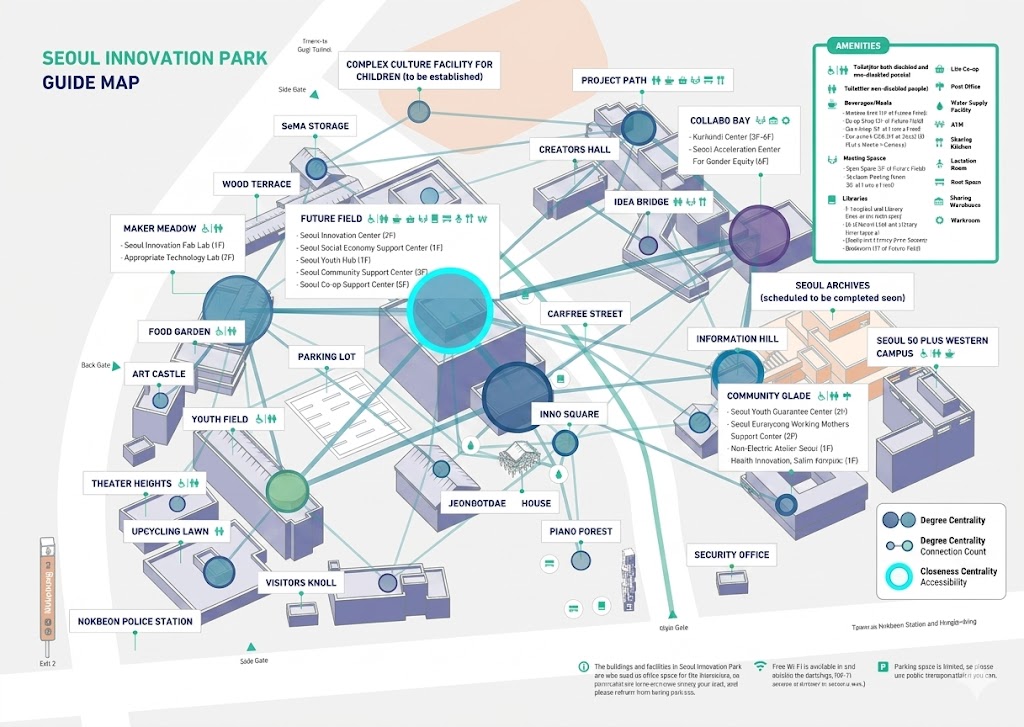
Part 1

Evolution of
a Social Innovation Network

This study examines governance-mode transitions and tension management within a state-designed social innovation cluster. Using Social Network Analysis, it traces the partnership evolution of organizations in Seoul Innovation Park across two stages: the Local Government-led Stage (2015–2017) and the Central Government-joining Stage (2018–2020).

The following web map visualizes the spatial distribution of partnership networks among SEOs during these periods.

Scroll to view the network map ↓
2015

The Beginning

The first resident organizations of Seoul Innovation Park begin to form their earliest partnerships.

These partnerships included government, business, civil sector, research sector, and the intermediaries that connected them across themes.

735 organizations · 948 partnerships
2016

Gradual Growth

Existing partnerships deepen
as the network expands into new sectors.

789 organizations · 1,074 partnerships
2017

Rapid Expansion

In 2017, the central government announced its Social Economy Revitalization Plan, promising additional support beyond what Seoul had already provided. New organizations joined the park, and the partnership network grew rapidly.

855 organizations · 1,209 partnerships
2018

Quantitative Shift

The network grew wider, but looser. Links rose from 913 to 1,134, yet average degree fell from 3.83 to 3.43 and average distance increased from 4.03 to 4.39. The network traded tight cohesion for a more diverse set of actors.

Collaboration with Seoul Metropolitan Government dropped sharply from 39% to 24%, while ties with central ministries (8 to 9%), national agencies (12 to 23%), and local governments (20 to 24%) expanded. A shift from a metropolitan-centered structure toward a "Dual-Axis Coordination Structure" linking central and local governments had begun.

2019

Qualitative Shift

Expansion outward brought fractures within. As organizations pursued external legitimacy, intra-park collaboration among SEOs dropped from 36% to 24% of civil-sector partnerships.

This is what our qualitative research captured as the "Intervention Paradox." The strategy to secure institutional durability through alignment with national policy and corporate partners expanded the network's resource base, but simultaneously eroded internal trust and legitimacy.

2020

What Came After

The data on this map extends through the first quarter of 2020. This is the last network we were able to observe.

Then COVID-19 shook the foundations of face-to-face collaboration. In 2021, a new mayor took office and the policy landscape around the park shifted. In 2024, the Seoul Metropolitan Government decided to demolish the site.

The space where 600 organizations built six years of relationships no longer exists. But the relationships mapped here remain.

Part 2

Network Structure and
Organizational Survival

In this space, people laughed, talked, and worked side by side. But did the structure of those relationships shape whether their organizations survived?

Through a Social Innovation Ecosystem (SIE) framework, this study views the cluster as a relational infrastructure through which resources and legitimacy flow. Using network data from 113 SEOs in Seoul Innovation Park along with their survival outcomes, logistic and complementary log-log models assessed how network centrality and partnership diversity influenced organizational survival.

Cluster network structure

Centrality Matters,
but Not All Centrality

The results revealed a clear asymmetry. Degree centrality significantly increased the probability of survival, while closeness centrality offered no advantage at all. Having many relationships mattered. Being close to the center of the network, by itself, did not.

Three dimensions of diversity and survival

The Two Faces of Diversity

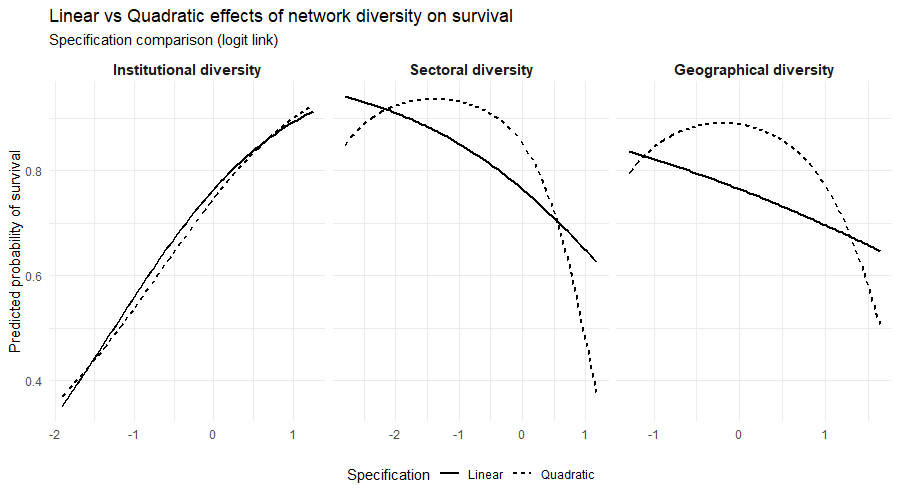
Institutional diversity linearly enhanced survival. Partnerships spanning different institutional bases, government, public agencies, and the private sector, strengthened organizational stability.

Sectoral and geographical diversity, however, told a different story. Both were negatively associated with survival, and the penalties accelerated as breadth increased. Relationships spread too wide blurred organizational focus and weakened the power of local embeddedness.

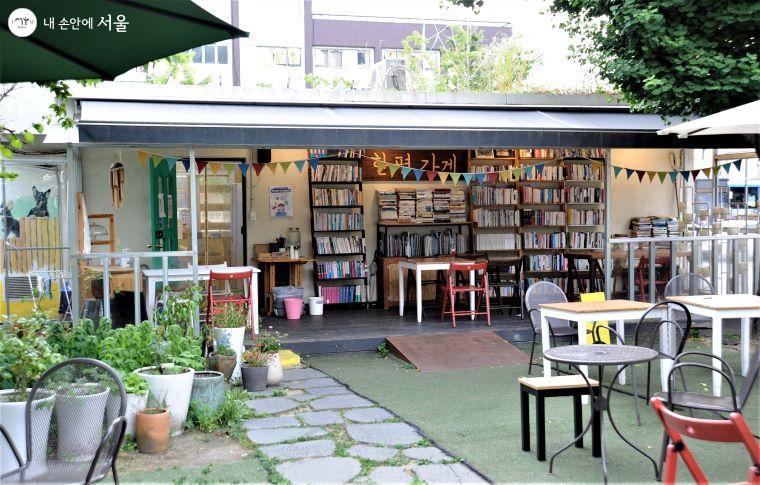
Seoul Innovation Park community space
Part 3

What the Space Created:
Matching, Sharing, Learning

Being in the same place was never just a physical fact. Within Seoul Innovation Park, organizations found each other (matching), shared what they had (sharing), and learned together (learning). Through in-depth interviews, this study traced what actually happened inside the cluster, mediated by networks, along these three mechanisms of agglomeration economies.

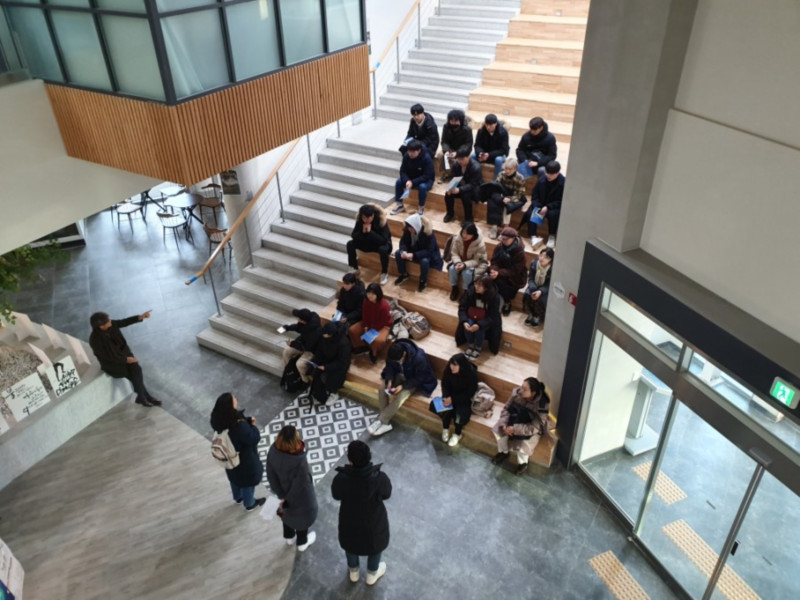
Seoul Innovation Park gathering

Matching

Matching here was never simply about supply meeting demand. Invisible criteria were at work: shared values, social commitment, a community-oriented mindset.

"We were able to hire a retired branch manager from OO Bank. At first, we were unsure because we only needed someone to handle receipt processing and basic accounting. We repeatedly asked if he was truly comfortable with the role. Eventually, not only did he efficiently manage his tasks, but his professional network also contributed to our business growth. I remember he was genuinely excited to work with young entrepreneurs like us, who were embracing new challenges."
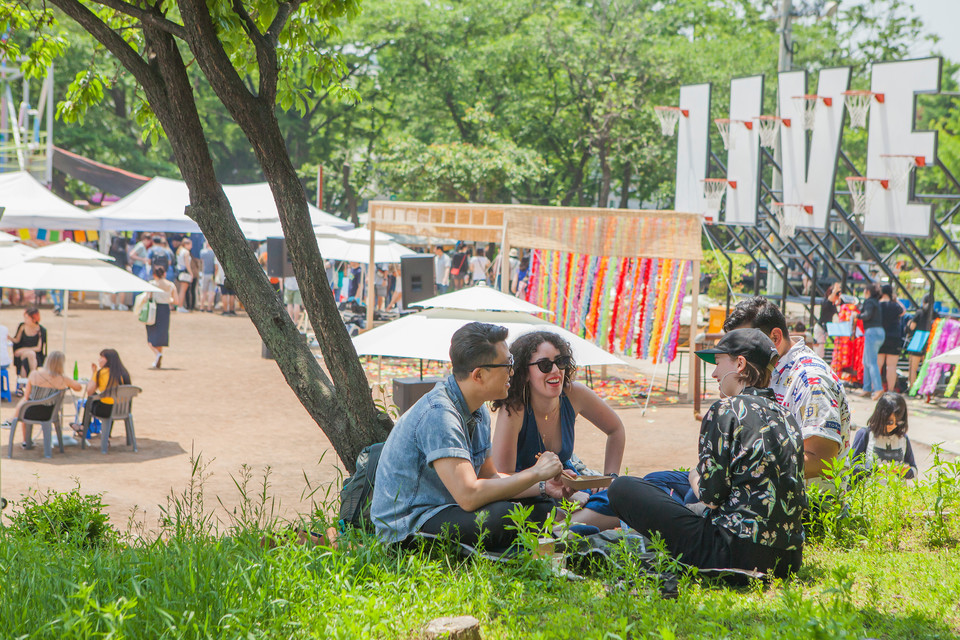
Seoul Innovation Park festival

A retired corporate executive and a young social entrepreneur met in the same space and filled each other's gaps. Artists collaborated with social enterprises. Global IT companies like Microsoft and Amazon formed partnerships with organizations in this small cluster. Chance encounters created by proximity led to connections no one had anticipated.

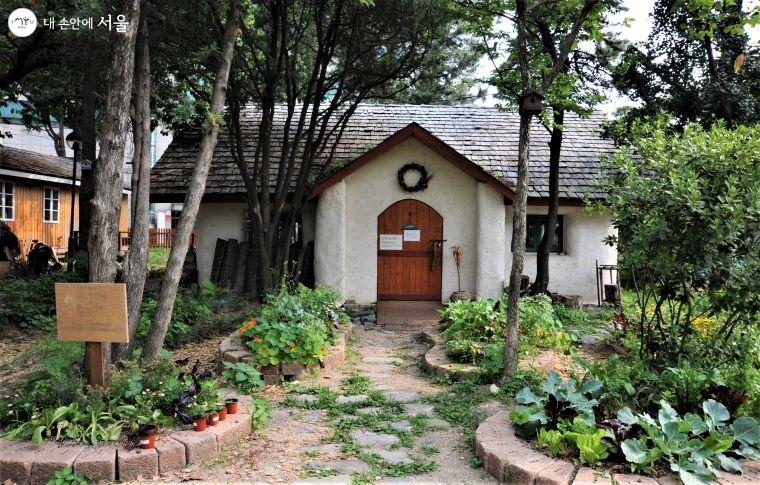
Seoul Innovation Park garden

Sharing

What was shared here went far beyond space. Financial risk, psychological solitude, and vision itself were all held in common. Organizations pooled 100,000 to 150,000 KRW each month into a mutual aid fund, carrying each other through difficult times.

"Having a space that was both suitable and affordable was extremely important for us. Since all we needed to do was submit an application to use the space, it felt like society was giving us a chance to explore possibilities. That's why, whenever people wanted to hold an event or invite someone for a discussion, Innovation Park was the first place that came to mind."
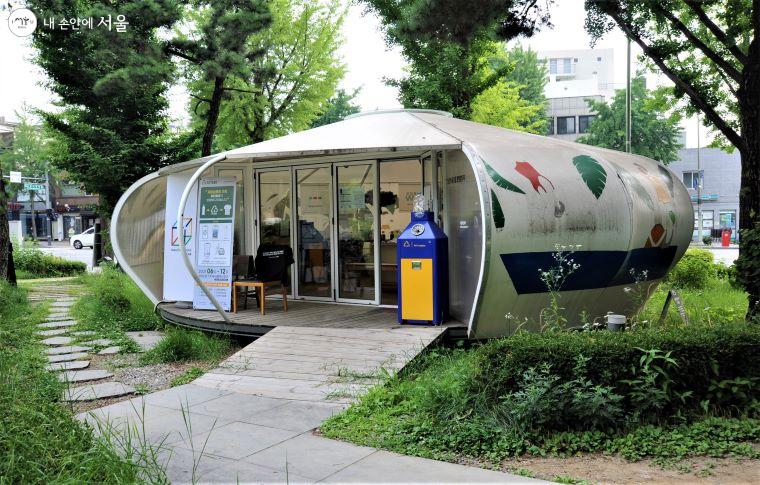
Seoul Innovation Park space

The space was also a psychological safety net. One participant described organizing an LGBTQ+ event, knowing it might draw disapproval from outside. But here, they felt protected instead.

"There was a shared understanding that everyone was doing difficult work, which created an atmosphere where people were willing to offer even small forms of help."
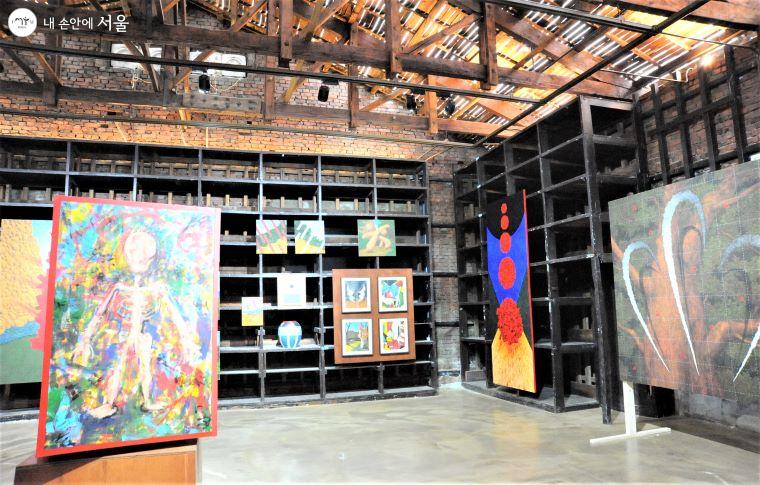
Seoul Innovation Park exhibition space

Learning

Learning here did not happen in classrooms. It happened at festivals, in hallways, outside offices late at night. At a festival with over 100 sessions in a single day, one participant experienced a shift in worldview.

"What I learned was that, at first, I assumed the lives of marginalized individuals must be dark and difficult. However, after meeting them and listening to their stories, I realized that their lives also contain moments of extraordinary beauty. It was a complete shift in perspective."
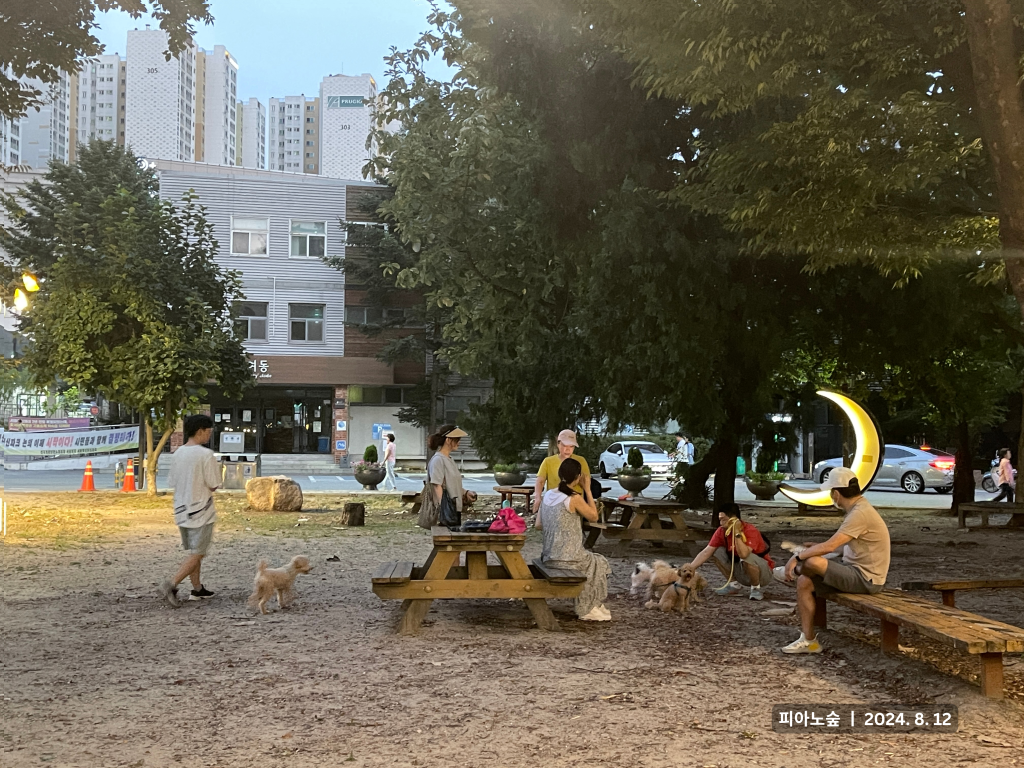
Seoul Innovation Park evening

Another participant first encountered veganism here, and it became the reason they decided to stay in the social enterprise sector. One organization, after failing three times to certify a support model for the hearing-impaired, visited ten similar organizations abroad through a training program arranged by an intermediary, and finally completed their business model.

"Looking back, I realized that there were only a handful of people in Korea who shared my concerns. When we gathered and shared our stories, there was an immediate sense of understanding, even without lengthy explanations."

What accumulated in this space was not mere knowledge. It was phronesis: the practical wisdom to judge what is right and act on it in the real world.

This research integrates the analysis of network formation, governance transition, and agglomeration dynamics within a social economy cluster, offering empirical grounding for spatial policies in social innovation.

Mina Kim · Dissertation Research
Agglomeration Economies in Social Economy Clusters

2015
CATEGORIES